
19
certifications completed
Claude Academy certified
Claude Academy training supporting our AI services.
We have completed all 19 certifications currently available, covering practical AI use, automation, development, data integrations and training. This helps us apply Claude more effectively across client projects.
Hover to view the title, or select a badge to verify the certificate


Completed through Anthropic’s Claude Academy · select any badge to view its public verification page.
AI Fluency: Framework & Foundations
Covers a structured approach to planning tasks, working with AI and reviewing the results.
AI Capabilities and Limitations
Covers where AI can be useful, where its limitations apply and how its output should be checked.
Claude 101
Covers the main features of Claude and how they can be used effectively in day-to-day work.
Claude Platform 101
Provides an overview of the Claude platform and the tools available for different types of work.
Building with the Claude API
Supports our work building custom AI automations, integrations and workflows using the Claude API.
Claude Code 101
Covers the use of Claude Code for development, technical tasks and maintaining digital systems.
Claude Code in Action
Develops the practical use of Claude Code across real development workflows and projects.
Introduction to Model Context Protocol
Covers how Claude can connect with business systems and data through Model Context Protocol.
Model Context Protocol: Advanced Topics
Covers more advanced MCP integrations, including access controls and reliable system design.
Introduction to Claude Cowork
Covers the use of Claude Cowork for shared workflows, planning and collaborative tasks.
Claude with Amazon Bedrock
Covers how Claude can be deployed and managed through Amazon Bedrock within AWS.
Claude with Google Cloud's Vertex AI
Covers how Claude can be deployed and managed through Vertex AI within Google Cloud.
AI Fluency for Builders
Focuses on using AI to support the design and development of practical tools and products.
AI Fluency for Small Businesses
Looks at practical ways small businesses can introduce AI into their everyday operations.
AI Fluency for Nonprofits
Covers the practical use of AI within charities, nonprofits and resource-conscious teams.
AI Fluency for Educators
Covers how AI can be introduced and explained clearly within learning and training environments.
AI Fluency for pK–12 Educators
Covers appropriate and responsible AI use within schools and education settings.
AI Fluency for Students
Provides a foundation in using AI effectively, responsibly and with an understanding of its limitations.
Teaching AI Fluency
Supports our ability to provide structured AI training and guidance for client teams.
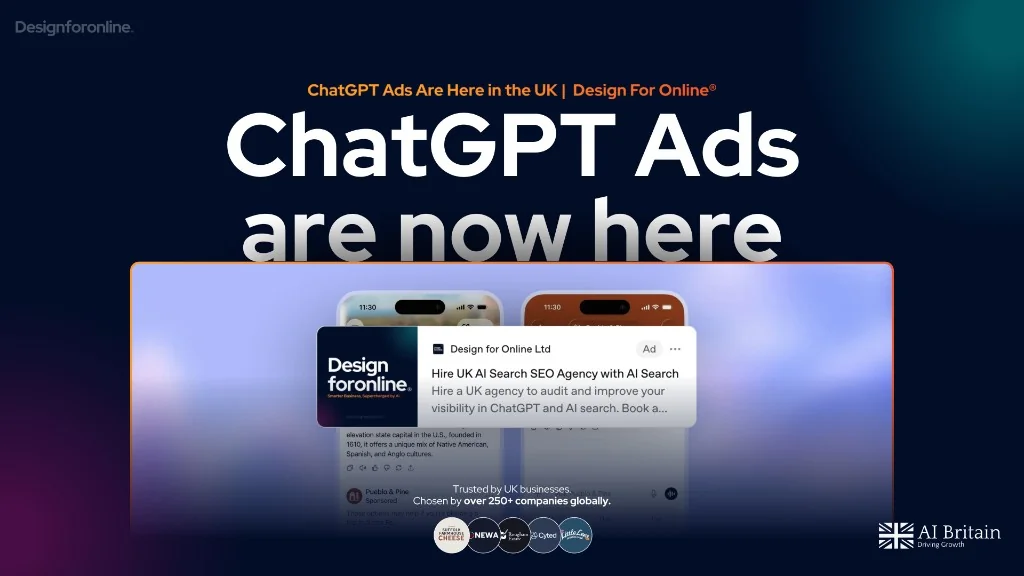
ChatGPT Ads Are Here in the UK: Our Guide After Launching a Campaign
ChatGPT Ads are now available in the UK. We launched a campaign in OpenAI Ads Manager and share how they work, what they cost, and ...
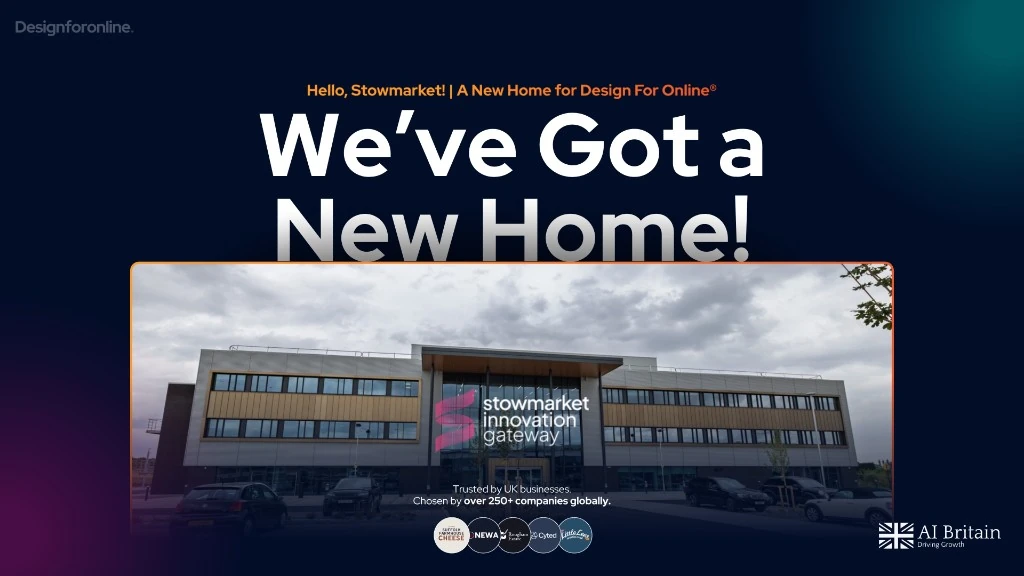
We’ve Got a New Home!
We’ve opened our new office and studio at Stowmarket Innovation Gateway, creating a new home for Design for Online® in Suffolk.

10 years of Design for Online®
Design for Online® celebrates 10 years in business, a new Stowmarket office and studio, and a decade of helping businesses grow across Suffolk and the ...